From Stuck to Unstoppable: How One App Finally Got My Life Moving
You know that feeling when your to-do list keeps growing, but you’re not actually getting anything done? I used to stare at my tasks every morning, overwhelmed and stuck. Then I found a simple trick — not a new app, but a new way to use one. It changed how I see progress, productivity, and even myself. This isn’t about doing more. It’s about feeling forward again. And it might be exactly what you need too.
The Moment Everything Felt Heavy
It was a Tuesday morning, and I was standing in my kitchen, coffee in one hand and phone in the other, scrolling through a to-do list that hadn’t changed in three days. Call the dentist. Finish the budget. Schedule the kids’ haircuts. Respond to Aunt Linda’s email. I could recite them in my sleep. But there I was, frozen. Not lazy, not unwilling — just completely overwhelmed. The list wasn’t helping me; it was haunting me. Every unfinished item whispered, You’re falling behind.
That morning, I missed a deadline for a small freelance project — nothing catastrophic, but it was mine, and I’d promised myself I’d stay consistent. When I realized it, I sat down on the kitchen floor and cried. Not because of the missed deadline, really. It was everything: the laundry I hadn’t folded, the birthday card I forgot to mail, the yoga mat still rolled up in the corner. I felt like I was running a race with no finish line, and worse, like I was failing at being the kind of woman who could keep it all together.
And then it hit me: I wasn’t broken. My system was. I’d been using the same task list method for years — check things off, feel good, move on. But it wasn’t working anymore. The lists were long, the motivation was low, and the sense of accomplishment? Almost nonexistent. I wasn’t lazy. I was just measuring my life the wrong way.
Why Checking Boxes Isn’t Enough
We’ve all been taught that productivity means checking things off. The more boxes you mark, the more you’ve done. But here’s the truth: crossing off “buy toilet paper” doesn’t make you feel like you’re growing. It doesn’t help you feel closer to your goals. It’s activity, not progress. And after a while, that kind of productivity starts to feel empty — like you’re busy, but not moving forward.
I started paying attention to how I felt after using my to-do app. Some days I’d finish five tasks and still feel like I’d done nothing. Other days, I’d only do two things but feel lighter, more in control. The difference wasn’t the number of tasks — it was the meaning behind them. When I called my mom just to check in, I felt connected. When I spent 15 minutes meal planning, I felt like I was caring for my family. Those weren’t just tasks; they were small acts of intention.
But my app didn’t see that. It treated “reply to work email” the same as “plan family game night.” No wonder I felt disconnected. Most productivity tools are built for efficiency, not for humanity. They track what you do, but not why it matters. And when you’re juggling work, home, health, and personal dreams, what you really need isn’t more efficiency — you need meaning. You need to see that your daily choices are adding up to something bigger.
That’s when I realized: I didn’t need a better app. I needed a better way to see my life.
The Shift: Tracking Progress, Not Tasks
What if, instead of tracking tasks, I tracked progress? Not “did I do it?” but “how did this move me forward?” That small shift changed everything. Instead of “write blog post,” I started framing it as “grow my confidence as a writer.” Instead of “go for a walk,” it became “honor my need for peace.” Suddenly, every action had a purpose — and that purpose was tied to who I wanted to be, not just what I needed to do.
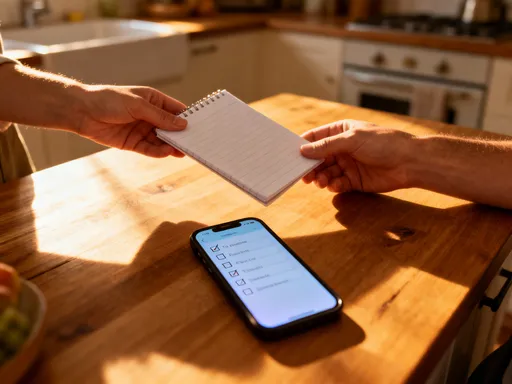
I kept using the same app — nothing fancy, just one I already had on my phone. But I changed how I used it. I stopped creating long lists of chores. Instead, I created a few core “progress goals” — things like “show up for myself,” “nurture my relationships,” and “build something that matters.” Then, I linked my daily actions to those goals.
For example, when I drank a glass of water, I didn’t just log it as a habit. I saw it as “caring for my body.” When I read a chapter of a book, it was “feeding my mind.” The app became less of a taskmaster and more of a mirror — reflecting not just what I did, but who I was becoming.
Here’s the beautiful part: even on days when I didn’t “get much done,” I could still see progress. Maybe I only managed five minutes of stretching, but I did it with intention. Maybe I snapped at my kid, but later I apologized — and that was progress too. The app didn’t judge me. It helped me notice growth in places I used to overlook.
And over time, something unexpected happened: I started looking forward to opening it. Not because I was chasing completion, but because I wanted to remember how far I’d come.
How to Turn Any App Into a Progress Tracker
You don’t need a special app for this. In fact, I recommend using one you already know — whether it’s Apple Reminders, Microsoft To Do, or Todoist. The tool isn’t the magic. The mindset is. But a few small tweaks can transform any task app into a progress tracker.
First, change how you name your tasks. Instead of “buy groceries,” try “nourish my family.” Instead of “pay bills,” try “protect our peace.” This small shift in language connects the action to a deeper value. It turns a chore into a choice — and that makes all the difference.
Second, create recurring reflections. I set a weekly reminder every Sunday night to look back at the past week. Not to judge, but to notice. I ask myself: When did I feel proud? When did I feel connected? Where did I grow? I don’t write long entries — just a few sentences. But that habit has become one of the most powerful parts of my week. It’s where I see the patterns, the small wins, the quiet progress.
Third, group your tasks by intention, not category. Most apps let you create folders or projects. Instead of “Work,” “Home,” and “Personal,” try “Grow My Confidence,” “Strengthen My Family,” and “Take Care of Myself.” Then, add tasks to those projects based on how they make you feel, not where they happen.
Here’s how I set it up in under 20 minutes: I opened my app and created three main projects — “Be Present,” “Feel Capable,” and “Create Something Meaningful.” Then, I went through my usual tasks and reassigned them. “Pack school lunches” went under “Be Present.” “Update my resume” went under “Feel Capable.” “Sketch a new blog idea” went under “Create Something Meaningful.”
That was it. No complicated setup. No new downloads. Just a shift in focus. And within days, I started seeing my day differently. I wasn’t just doing things — I was building something. And that changed how I showed up in the world.
The Ripple Effect on Life Beyond Work
When you start seeing progress, everything changes — even the parts of life that have nothing to do with tasks. I noticed it first in my sleep. I used to lie awake, replaying everything I hadn’t done. But now, when I close my eyes, I think of the small moments I did show up: the hug I gave my daughter after school, the five minutes I spent stretching, the honest message I sent to a friend.
My husband said, “You seem lighter.” My son said, “Mom, you’re not yelling as much after dinner.” And he was right. I wasn’t just managing my time better — I was managing my energy, my attention, my heart. Because when you feel like you’re moving forward, you don’t carry the weight of unfinished business.
One evening, I sat with my daughter while she worked on a school project. I wasn’t checking my phone. I wasn’t thinking about the dishes. I was just there. And later, she said, “Thanks for helping me, Mama. You were really listening.” That moment didn’t show up on any task list. But in my progress tracker, it was everything. It was “being present” in action.
That’s the ripple effect: when you start feeling capable in one area, it spreads. You start believing you can handle more — not because you’re doing more, but because you trust yourself. You’ve seen your own progress. You know you can adjust, recover, keep going. And that quiet confidence changes how you move through your days.
Building a Habit That Sticks (Without Willpower)
We’ve all been there: start strong, fade fast. I used to think building a habit was about discipline. Now I know it’s about design. The real secret isn’t willpower — it’s making the habit so easy and meaningful that you don’t want to skip it.
Here’s how I made my progress tracking stick: I paired it with something I already loved — my morning coffee. Every day, after I poured my cup, I opened my app and reviewed yesterday’s progress. Not to check tasks, but to notice. What made me proud? What felt meaningful? Sometimes it took two minutes. Sometimes less. But that tiny ritual — coffee and reflection — became sacred.
I also changed my notifications. Instead of alerts that said “Don’t forget your tasks,” I set one that pops up at 8 p.m. and asks, “What’s one thing you’re proud of today?” At first, it felt strange. But soon, I started looking forward to it. It became a moment of kindness in my day — a chance to pause and give myself credit.
And here’s the thing: over time, it stopped feeling like productivity. It started feeling like self-care. Like a daily conversation with myself. I wasn’t tracking tasks to prove I was busy. I was reflecting to remember I was growing. And that made all the difference. You don’t need motivation to keep going when the habit feels good.
You’re Not Behind — You’re Just Measuring Wrong
If you’re feeling stuck, I want you to hear this: you’re not behind. You’re just measuring your life in a way that doesn’t show your true progress. Real growth isn’t always visible in completed tasks. It’s in the choice to try again after a hard day. It’s in the quiet decision to rest when you’re tired. It’s in the way you show up, even when no one’s watching.
The right tech tool doesn’t push you to do more. It helps you see how much you’re already doing — and how far you’ve come. It reminds you that progress isn’t a straight line. It’s messy, human, and deeply personal. And sometimes, all it takes is a small shift — like tracking progress instead of tasks — to feel forward again.
I still use my app every day. But now, it’s not a list of what I owe the world. It’s a record of who I’m becoming. And that, more than any checked box, is what gives me peace. Because I’m not chasing perfection. I’m noticing growth. And that’s enough.
So if you’re feeling stuck, I invite you to try this: pick one area of your life — just one — and start tracking progress, not tasks. See what happens when you measure yourself by meaning, not just momentum. You might be surprised at how unstoppable you feel — not because you’re doing everything, but because you finally see what you’re already doing.